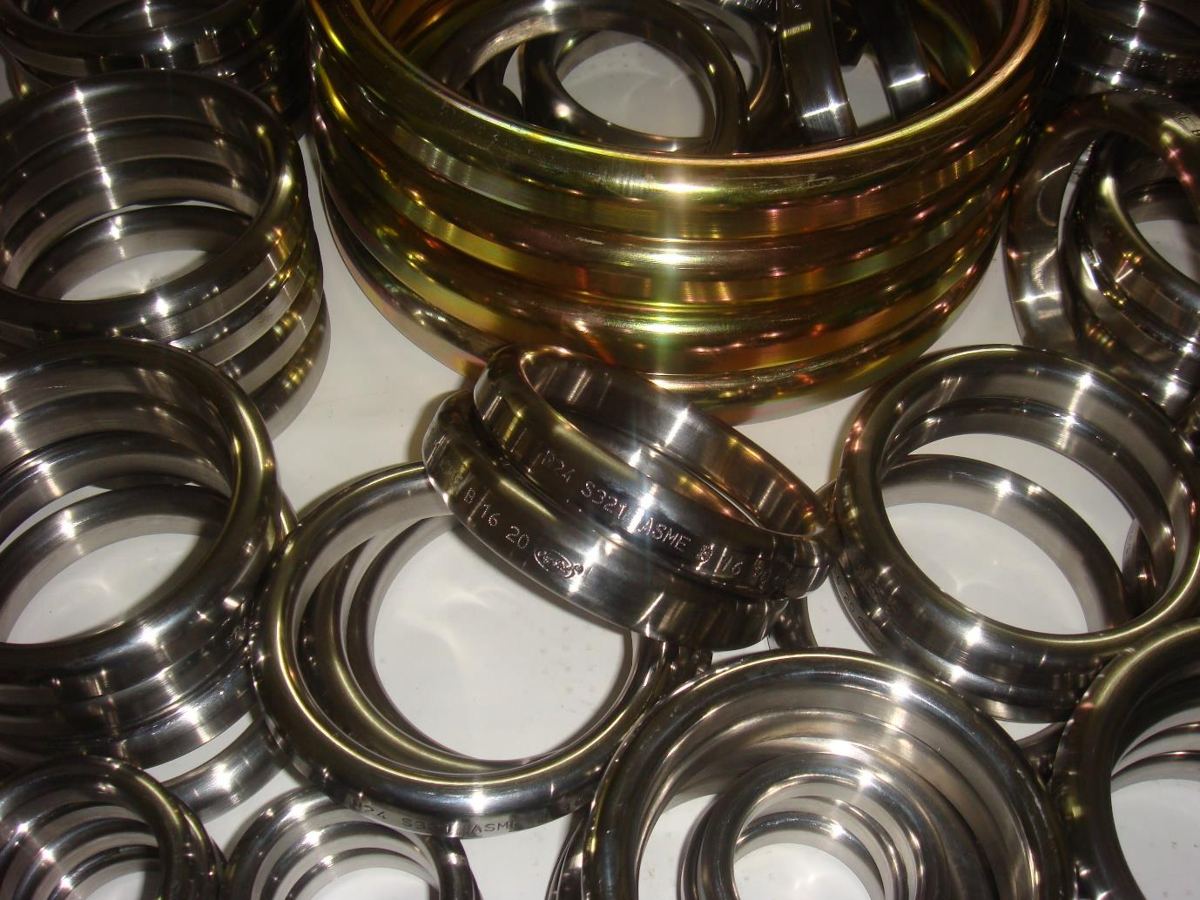
What is a metallic gasket?
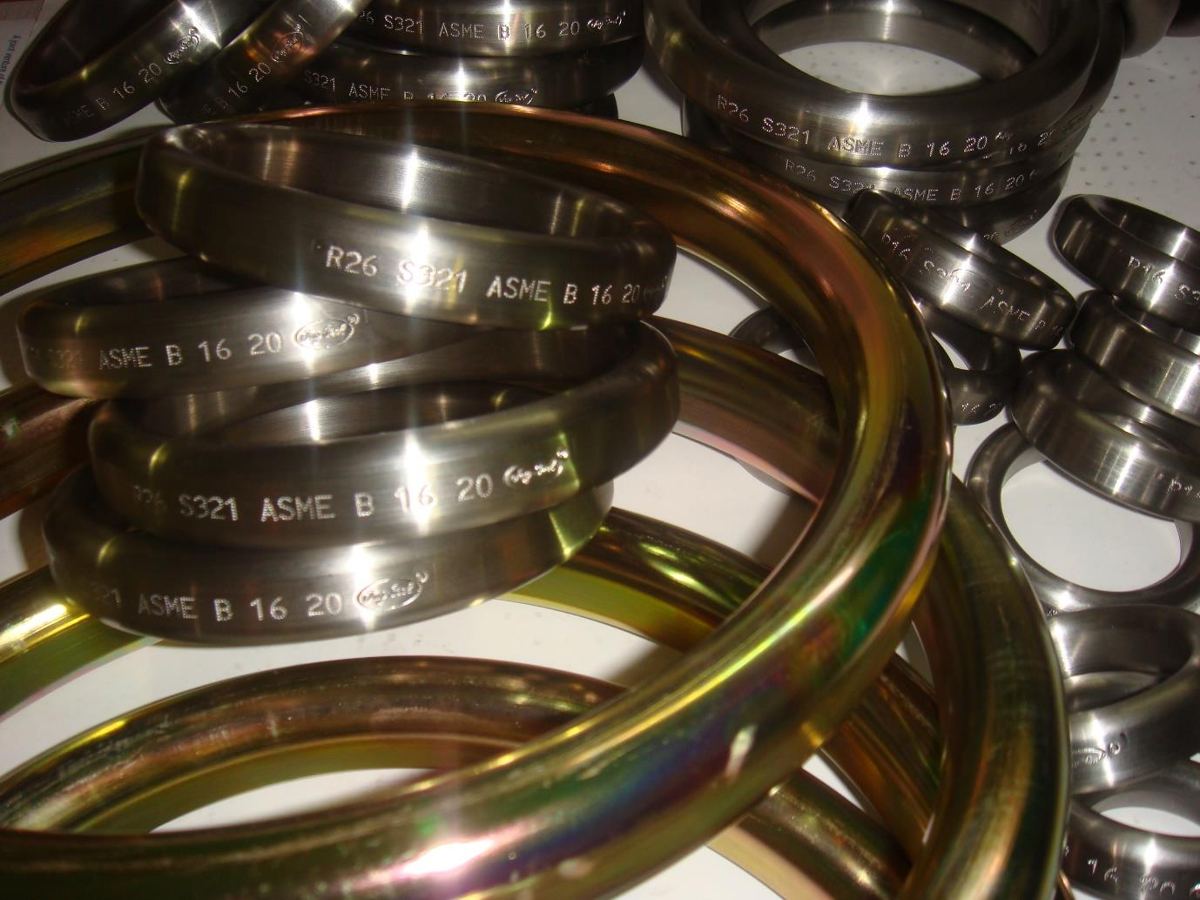
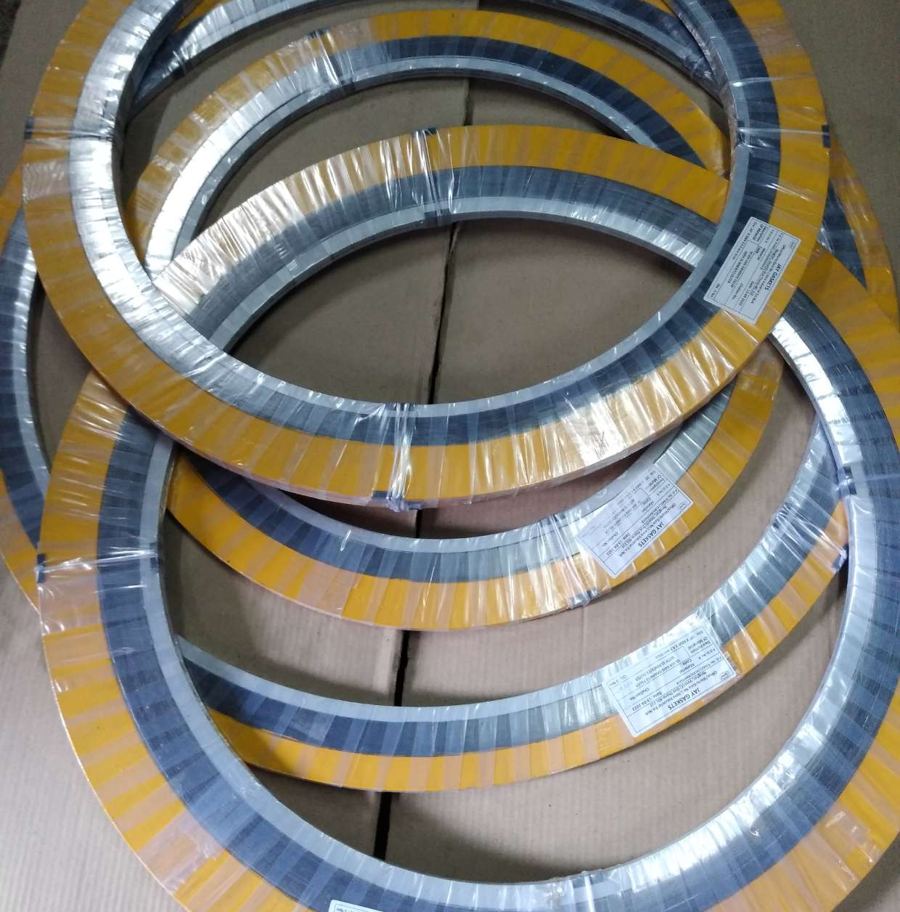
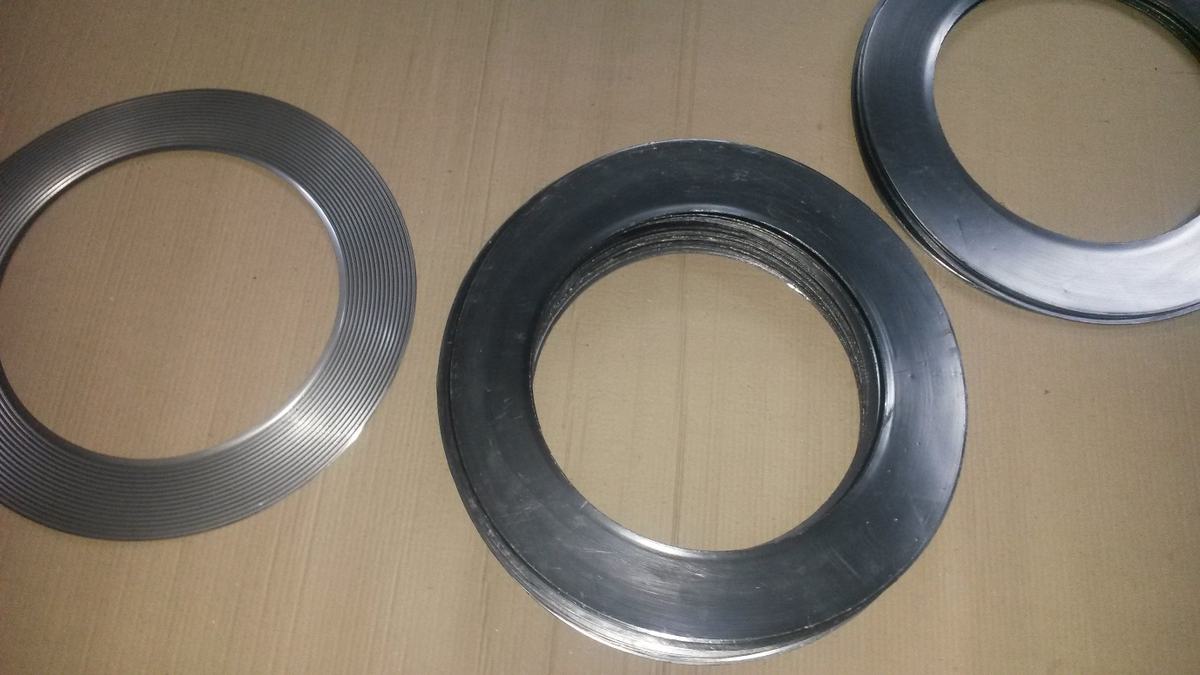
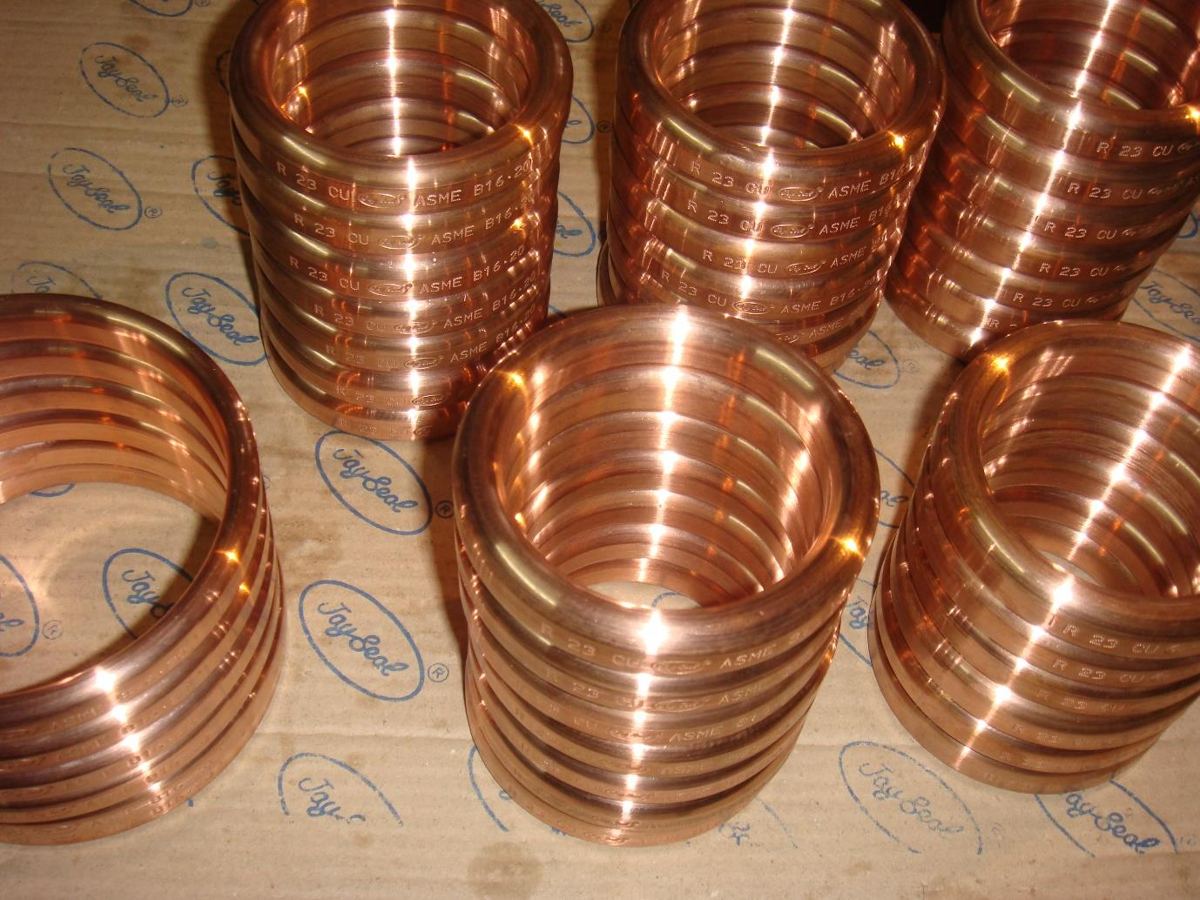
A metallic gasket is made wholly or mainly of metal. A solid metallic gasket such as a ring joint seals by plastic deformation of the metal against a machined groove. A semi-metallic gasket such as a spiral wound or kammprofile gasket uses metal for strength and springback, plus a soft filler or facing that does the sealing.
Both types are covered by ASME B16.20 for pipe flanges; ring gaskets for wellhead equipment are covered by API 6A.
Types of metallic gaskets
| Type | Construction | Typical service |
|---|---|---|
| Ring joint, R oval / octagonal | Solid metal ring in a machined groove | High-pressure piping on RTJ flanges |
| Ring joint, RX | Pressure-energised octagonal ring | Wellhead and high-pressure equipment, API 6A |
| Ring joint, BX | Pressure-energised ring for 6BX flanges | Very high pressure, API 6A |
| Flat / corrugated metal | Plain or corrugated metal sheet | Valves and equipment with high bolt load |
| Spiral wound (semi-metallic) | Metal strip wound with graphite, PTFE or ceramic | Refinery and process piping, class 150–2500 |
| Kammprofile (semi-metallic) | Grooved metal core with soft facing | Heat exchangers and problem joints |
| Double jacketed (semi-metallic) | Filler enclosed in a metal jacket | Heat exchangers, reactors, manholes |
JaySeal makes ring joint gaskets, spiral wound gaskets, kammprofile gaskets and jacketed and corrugated gaskets.
Materials and hardness
A solid metal gasket must be softer than the flange, so the gasket deforms and the flange groove does not. ASME B16.20 limits the hardness of ring gaskets:
| Ring material | Code | Max. Brinell | Max. Rockwell B |
|---|---|---|---|
| Soft iron | D | 90 | 56 |
| Low carbon steel | S | 120 | 68 |
| 4-5 chrome ½ moly | F5 | 130 | 72 |
| SS 410 | S410 | 170 | 86 |
| SS 304 / 316 / 347 | S304 / S316 / S347 | 160 | 83 |
For semi-metallic gaskets the metal is chosen for the fluid and temperature: SS 304/316L for most service, 321 and 347 for high temperature, Monel for seawater and HF acid, Inconel and Hastelloy for severe service.
Metallic vs non-metallic gaskets
| Metallic / semi-metallic | Non-metallic | |
|---|---|---|
| Pressure | Medium to very high | Low to medium |
| Temperature | High (limited by metal / filler) | Limited by the soft material |
| Bolt load needed | Medium to high | Low |
| Thermal cycling | Good to very good | Fair |
| Flange type | Raised face, RTJ, tongue & groove | Raised and flat face |
| Cost | Higher | Lower |
For the soft family see non-asbestos, PTFE, graphite and rubber gaskets, or the full guide to gasket types.
When to choose a metallic gasket
- Flanges are ring-type joint (RTJ): a ring gasket is the only choice.
- Pressure class 600 and above, or hydrocarbon and hydrogen service.
- Temperatures beyond what PTFE, rubber or fibre sheet can take.
- Joints that cycle in temperature and must keep their seal, such as heat exchangers.