What is a gasket?
A gasket is a compressible seal placed between two flange faces. When the bolts are tightened the gasket flows into the small imperfections of the faces and blocks every leak path. It must keep sealing as pressure, temperature and bolt load change over the life of the joint.
Industrial gaskets are made to standards such as ASME B16.20 (metallic and semi-metallic gaskets for pipe flanges), ASME B16.21 (non-metallic flat gaskets), API 6A (ring gaskets for wellhead equipment), DIN, IS, or to the customer's drawing.
The three families at a glance
| Family | Gasket types | Pressure | Temperature | Typical flanges |
|---|---|---|---|---|
| Non-metallic (soft) | CAF / non-asbestos, PTFE, graphite, rubber | Low to medium (mostly class 150–300) | Rubber ~100–200 °C, PTFE 260 °C, graphite ~450 °C in air | Raised and flat face, equipment covers |
| Semi-metallic | Spiral wound, kammprofile, double jacketed | Medium to high (class 150–2500) | Up to 450–650 °C, depending on filler and metal | Raised face, tongue & groove, heat exchangers |
| Metallic | Ring joint (R, RX, BX), solid metal | High (class 600 and above, API 6A) | Limited by the metal | Ring-type joint (RTJ) flanges, wellheads |
Insulation gasket kits sit alongside these: they electrically isolate two flanges for cathodic protection.
Non-metallic gaskets
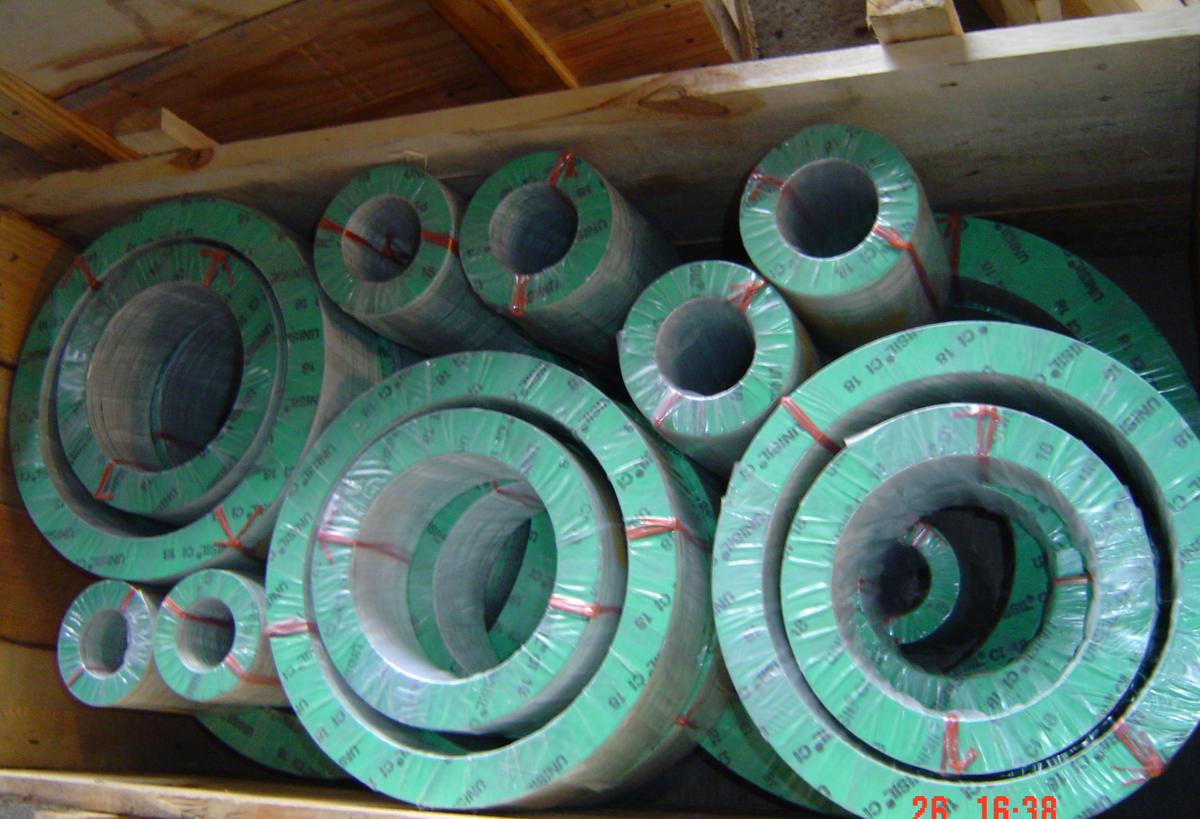
- CAF / non-asbestos (CNAF): compressed fibre sheet for water, steam, oils and mild chemicals. Grades are chosen by IS 2712 (W, O and A grades).
- PTFE: for acids, alkalis, food and pharma service up to about 260 °C; envelope PTFE adds strength with a fibre or rubber insert.
- Flexible graphite: for hot and cycling service; plain, foil laminated, mesh reinforced or tanged.
- Rubber and rubber with metal inserts: nitrile, EPDM, neoprene, Viton and silicone for water, air, oils and low-pressure lines.
Semi-metallic gaskets
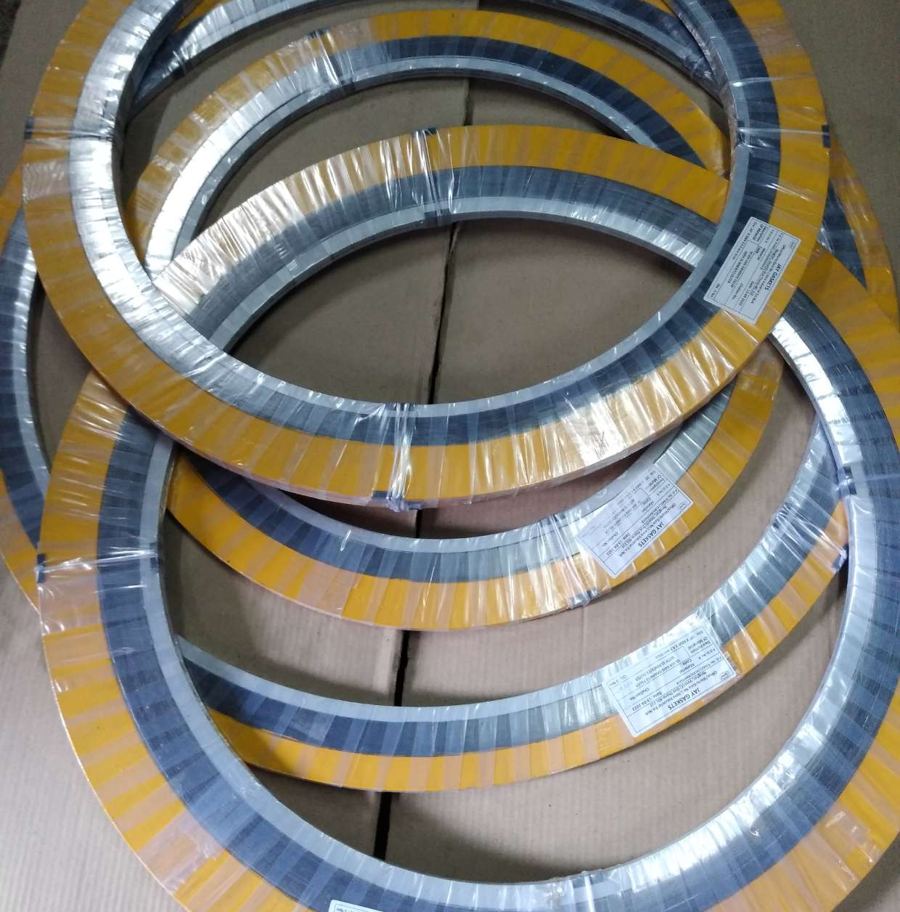
- Spiral wound: a V-shaped metal strip wound with graphite, PTFE or ceramic filler. The workhorse of refinery and process pipework, class 150–2500.
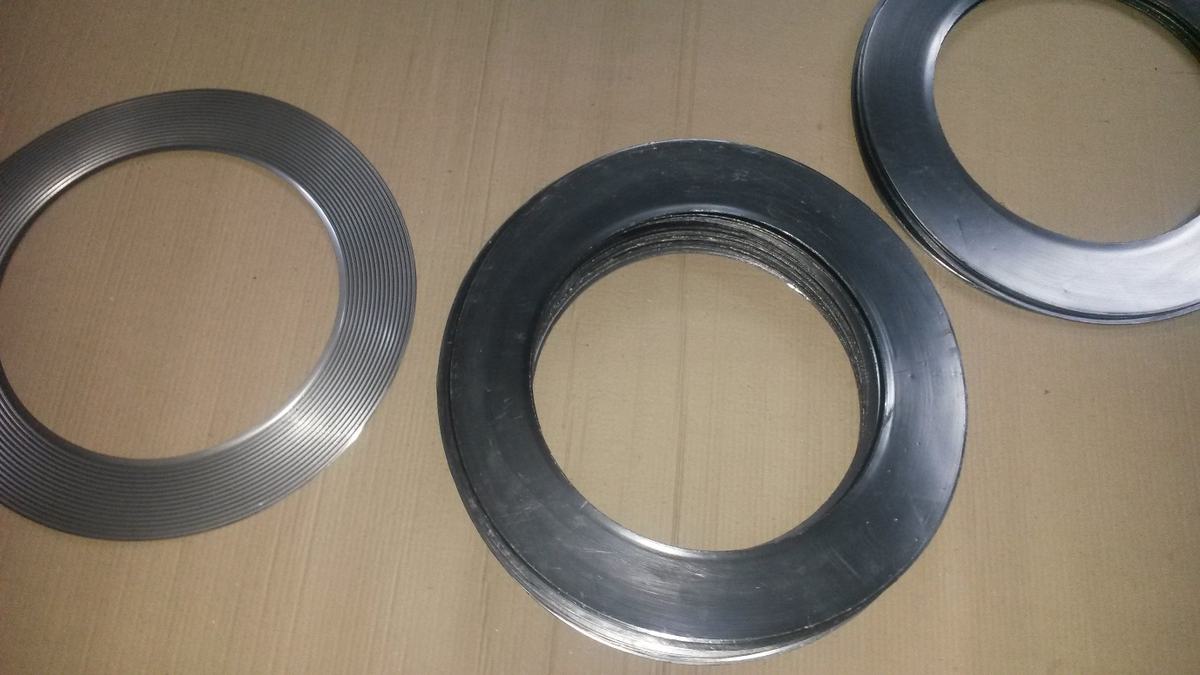
- Kammprofile (camprofile): a grooved solid metal core with graphite or PTFE facing. Seals at low bolt load; the usual upgrade for leaking heat exchanger joints.
- Double jacketed: filler enclosed in a metal jacket. The economical standard for heat exchanger channels and covers.
For exchanger joints in particular, see heat exchanger gaskets and our comparison of the three types.
Metallic gaskets
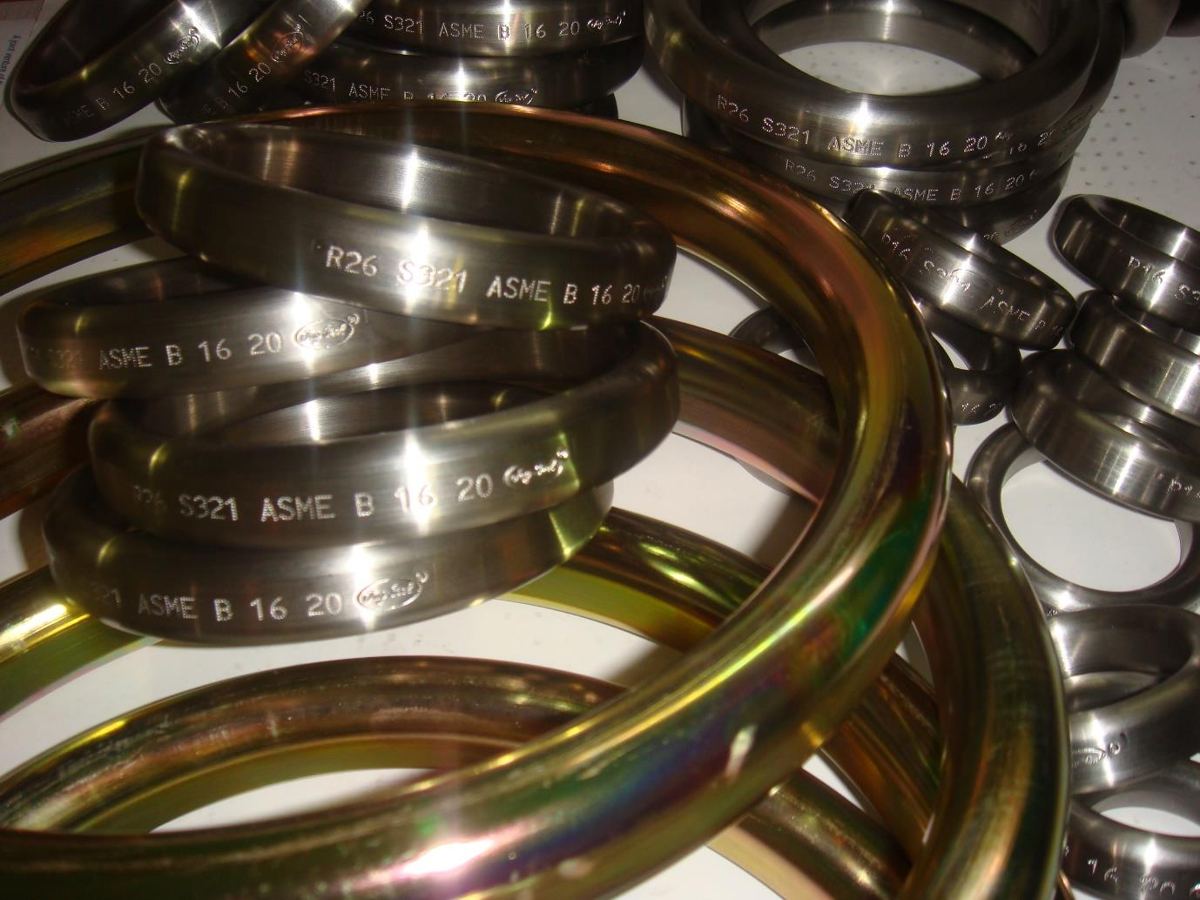
Ring joint (RTJ) gaskets are solid metal rings that sit in machined grooves. Oval and octagonal R rings, pressure-energised RX rings and BX rings for API 6BX flanges handle the highest pressures. The ring must always be softer than the flange groove: soft iron 90 BHN, low carbon steel 120 BHN, SS 304/316 160 BHN.
How to choose: five questions
- What is the fluid? It decides the chemistry: winding or core metal, filler, or the soft material.
- What are the temperature and pressure, including upsets and start-up? This usually decides the family.
- What is the flange type and face? Raised face, flat face, tongue & groove or RTJ, and the face finish.
- How much bolt load is available? Light flanges and equipment covers need a gasket that seals at low stress, such as graphite or kammprofile.
- Does the joint cycle? Heat exchangers and reactors need resilience: spiral wound with an inner ring, or kammprofile.